I have a problem - not a real problem on the grand scheme of things, but a problem all the same. It goes something like this:
- I’m left alone without a plan for dinner.
- Despite living within a 5 minute walk of a shop, I inevitably leave it until 8PM to muster the will to leave the flat.
- Like anyone, I am then prone to extraordinarily poor decision-making on what I subsequently eat.
- I leave the shop having bought pizza and white chocolate for the second time that week.
Obviously, this one-two combo is delicious and completely fine on occasion - but as a default mode of behaviour, it’s not ideal.
Human Behaviour Change and Nudges
One of my sturdiest precepts is that idea that human behaviour change is really quite hard - at least, I’ve found changing how I behave can be a glacially slow process. Thankfully, there’s a wealth of beautifully crafted material to help manoeuvre through such changes.
The ‘trick’ seems to be engineering nudges that, over time, change your default behaviour. Very much in the ‘simple, but not easy’ category.
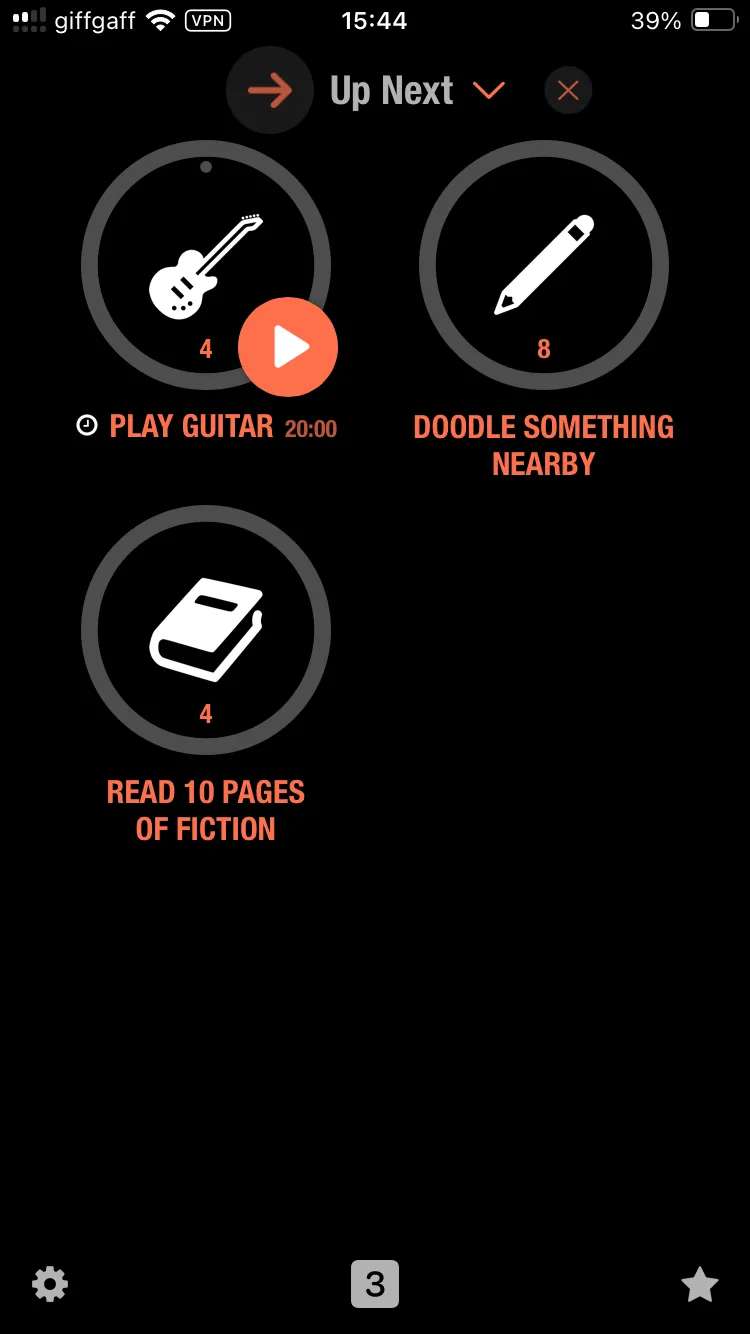
And, being not easy, I’ll take any help I can get. To that effect, I’ve been really enjoying the Streaks app recently, as means of creating those nudges. It’s a ludicrously sparse interface - which is to say, it’s a fabulous piece of design. It turns out that nothing more than a few buttons on my home screen is entirely sufficient to gently push me in the direction:
So, I wondered: what would it take to nudge my pizza-led decision making? How can I make it easy to do the right thing?
Software for One, Please
It was while stewing on this problem that I re-discovered a recent post that led HackerNews for a day or so - the charming idea of “Software for an Audience of One”. Software that is not built for scale, but sufficiency. It does precisely one thing, for one person, really well.
So, what were the specifics that I needed out of my first piece of homebrew software?
- Quick - it needs to respond to my predictably late arrival at the decision for food.
- Seamless - it needs to work with my preferred note-taking app, on mobile and on desktop.
- Cheap - it needs to not require new domains, cloud providers or expenditure of any kind.
Recipe Book is born!
A couple of evenings spent with Claude (and maybe a pizza) later, here’s the outcome:
So, what’s going on here?
- I’ve got the static site being run out of a desktop machine at home.
- That desktop and my other devices all sit on a Tailscale VPN.
- This allows me to route traffic to the service without involving any new services.
- Once in, I can:
- Filter for easy meals
- Select the things to shop for
- Strike off the items I’ve already got in
- Copy it into Obsidian as a list of tasks
And that’s it! It makes organising a healthier meal a 20s operation, just about quick enough to make the right thing, the easy thing.
Crucially, it works for me. Twice already, I’ve intercepted my pizza instinct and instead arrive home with a meal that my partner might endorse!
An LLM Digestif 1
Would I want anyone else interacting with the software? Would I show the code to colleagues? Probably not. To be entirely honest, I’ve scarcely looked at it myself.
But to ask that kind of misses the point: there’s a real sense of agency in solving these quite small, personal problems. That was always possible, but is, I think, made easier with the state of LLM-powered tooling. Where I’m not shipping to paying customers, managing sensitive data or trying to learn something new, I’m reasonably content to delegate this out to the model.
Whilst it’s not going to tip the ledger for LLMs’ impact in general, perhaps this is a positive case that can be made for them - that they might help people solve their local problems in a way that improves their lives in modest ways.
Footnotes
-
Because it’s 2026, and no post is complete without a Take on the technology 🙈 🙉 ↩